
Wayne County Court Record Requests
First figure out which court created the record. Then check Utah Courts Xchange, where public case information and some district document images are open to view. Free CORIS and Xchange inspection terminals sit in eligible courthouses and at the State Law Library. Need a document that is not online, a certified copy, or restricted material you may be allowed to see? Contact the court clerk in person or by phone. Then send the state Request for Court Record form through an accepted delivery channel. Written requests are allowed under the rules, including mail plus appropriate email or fax arrangements. Before emailing Wayne district documents, confirm the clerk's instructions. Never send private information first.
- Identify the court level, Wayne County location, case number, and exact record.
- Inspect Xchange or a free courthouse terminal before ordering a copy.
- Send a specific written request to the district or justice clerk.
- Ask for a cost estimate when research, redaction, media, or certification may apply.
- Choose inspection, a plain copy, or a certified copy and arrange delivery.
Wayne County Has Two Court Clerks
Sixth District Court Deputy Clerk Kassidee Brown keeps the Loa district files, reachable at 435-836-1301. Wayne County Justice Court Clerk Jakelle Pace handles the limited-jurisdiction files at 435-836-1321. The County Clerk/Auditor is a county-government officer, not a stand-in for either court clerk. Send the request to the wrong office. The docket search stalls, even with every other detail right.
District clerkCivil, domestic, probate, felony, and Class A misdemeanor records live here.
Justice clerkTraffic, infractions, ordinances, most Class B and C misdemeanors, and small claims.
Kinds of Court Records
Wayne County court records run from a short public case history to the filings and recordings behind it. Classification, court level, age, and format all shape access. A weekly report or calendar adds context. Neither one replaces the clerk-maintained case file.
- CORIS case-history entries and public Xchange document images
- Paper pleadings, motions, orders, judgments, and exhibits
- Public hearing minutes, calendars, and case accounting
- Digital audio or video recordings and official transcripts
- Appellate records and older material transferred to Utah State Archives
Free Wayne County Courthouse Inspection
A paid Xchange account is not the only way in. Utah Courts also offers free public CORIS and Xchange access at eligible courthouse terminals, though document copies may still cost money. The official courthouse-access explanation lays out how terminal inspection differs from a paid remote account and what each one covers.
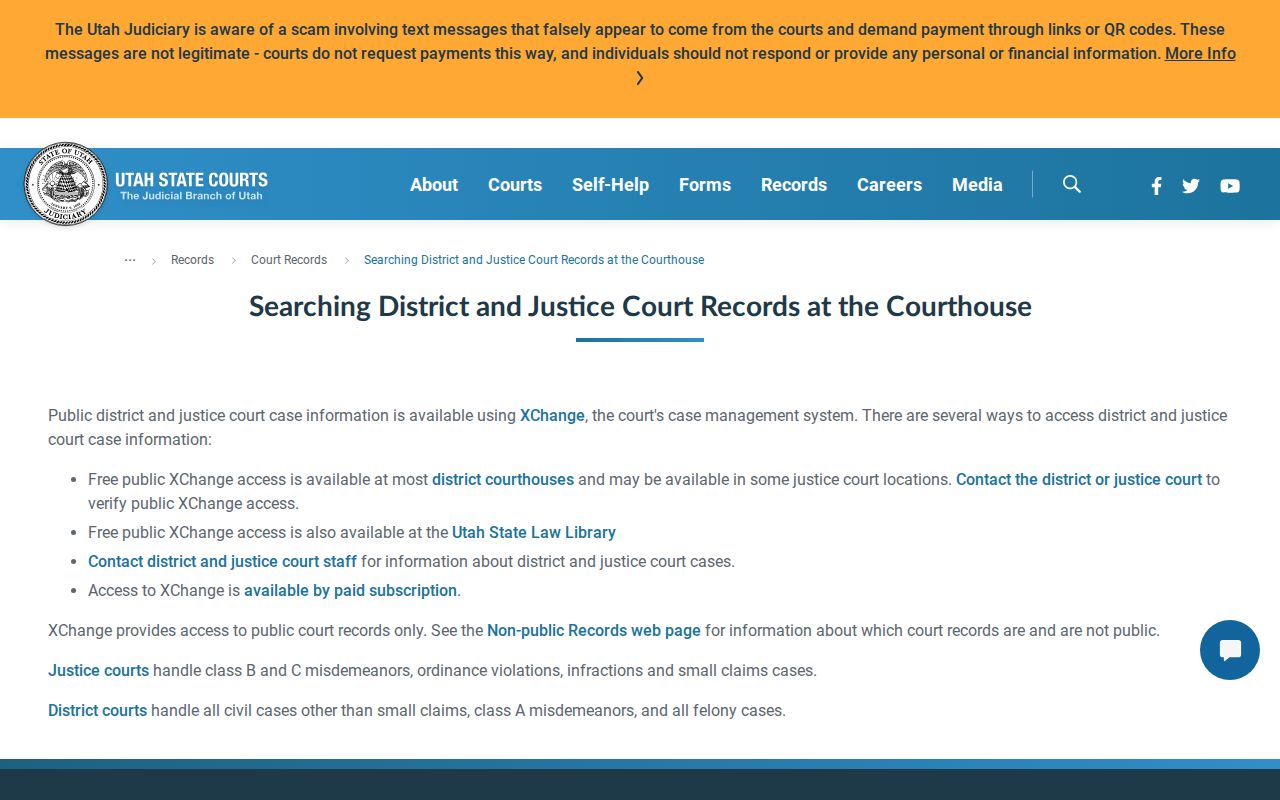
The terminal works well for a first pass. Read the case history there, then decide which Wayne County documents are worth ordering.
Court Records: What They Contain
A public Wayne County file can mix summary data with filings, event entries, orders, and financial information. Xchange calls its register-style sequence a case history. One caution applies. A field in the interface does not promise that every underlying image is public or sold for remote purchase.
| Header | Court, location, case number, type, filing date, judge, status, and disposition when shown. |
|---|---|
| Parties | Public party roles and attorneys of record, subject to access limits. |
| Case history | A dated sequence of filings, hearings, motions, pleas, rulings, and closure events. |
| Documents | Public pleadings, notices, orders, judgments, and images available for purchase. |
| Accounting | Public costs, payments, balances, judgment amounts, or satisfaction entries when recorded. |
Wayne Parties Can Use MyCourtCase
MyCourtCase is free, but only for a party whose eligible case is linked to the account. It can show that party's case history, documents, and payment functions. It is not the general public search. The official MyCourtCase description draws the account boundary clearly.
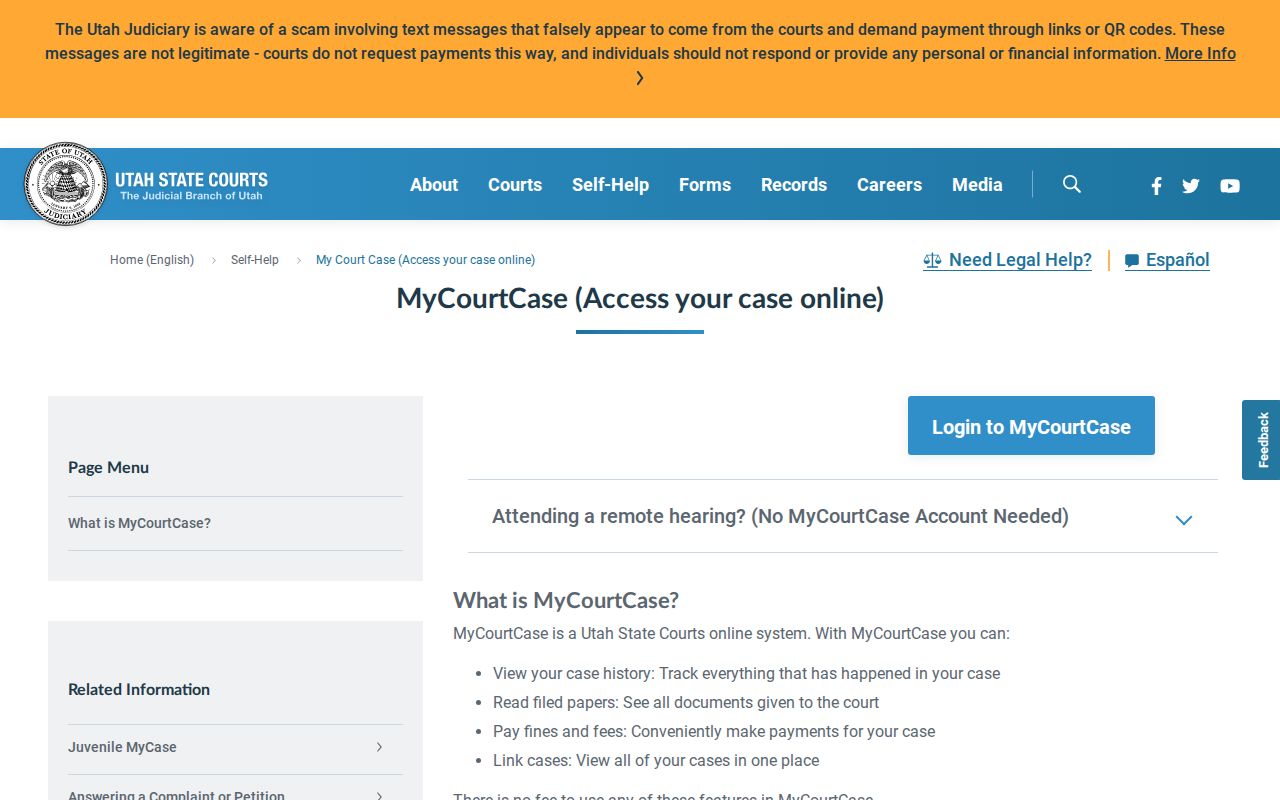
Following someone else's public case? Use Xchange or the clerk route. A party account is not the tool for a Wayne County docket search.
Wayne Hearing Audio and Transcripts
To order a hearing recording in Wayne County, use form 1100GE rather than a general copy request. The form asks for the court, the case number, and the hearing date. You also choose a format, include payment, and say how you want delivery. Transcripts are different. Those follow separate official instructions. You may need to pick a certified or noncertified version. The Utah transcript and recording route also lists the Wayne district document email and the FTR Cloud option. It is worth a look before you file.
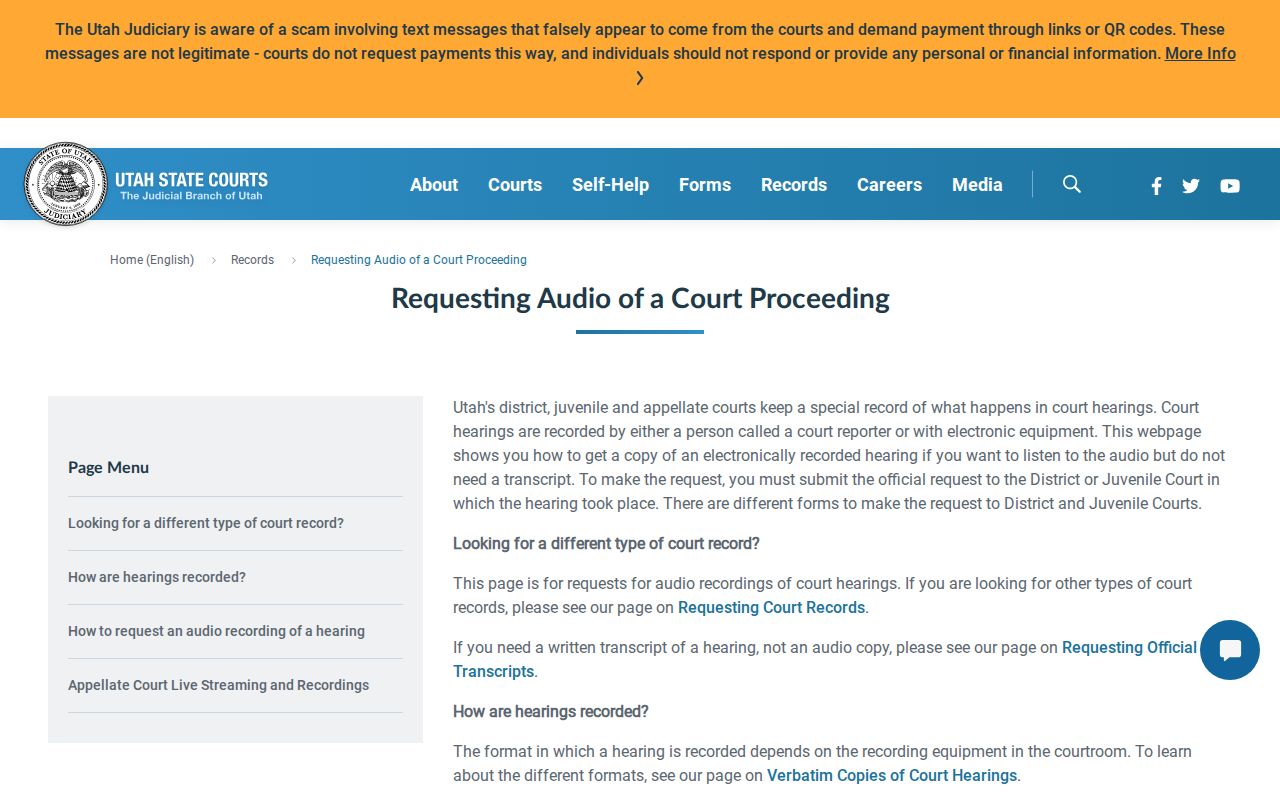
Anything left for pickup does not sit forever. The clerk may destroy physical items after thirty days, so confirm your delivery or pickup arrangements when you file the request.
Efiling Is Not a Wayne Record Search
Utah State Courts District and Justice Court eFiling exists for attorneys and registered filing users who submit documents. It is not a public lookup tool. Filings can flow into CORIS and the public Xchange case history once access rules allow. Searching is a separate step. The state eFiling workflow draws this line clearly: registered submission on one side, public inspection on the other.
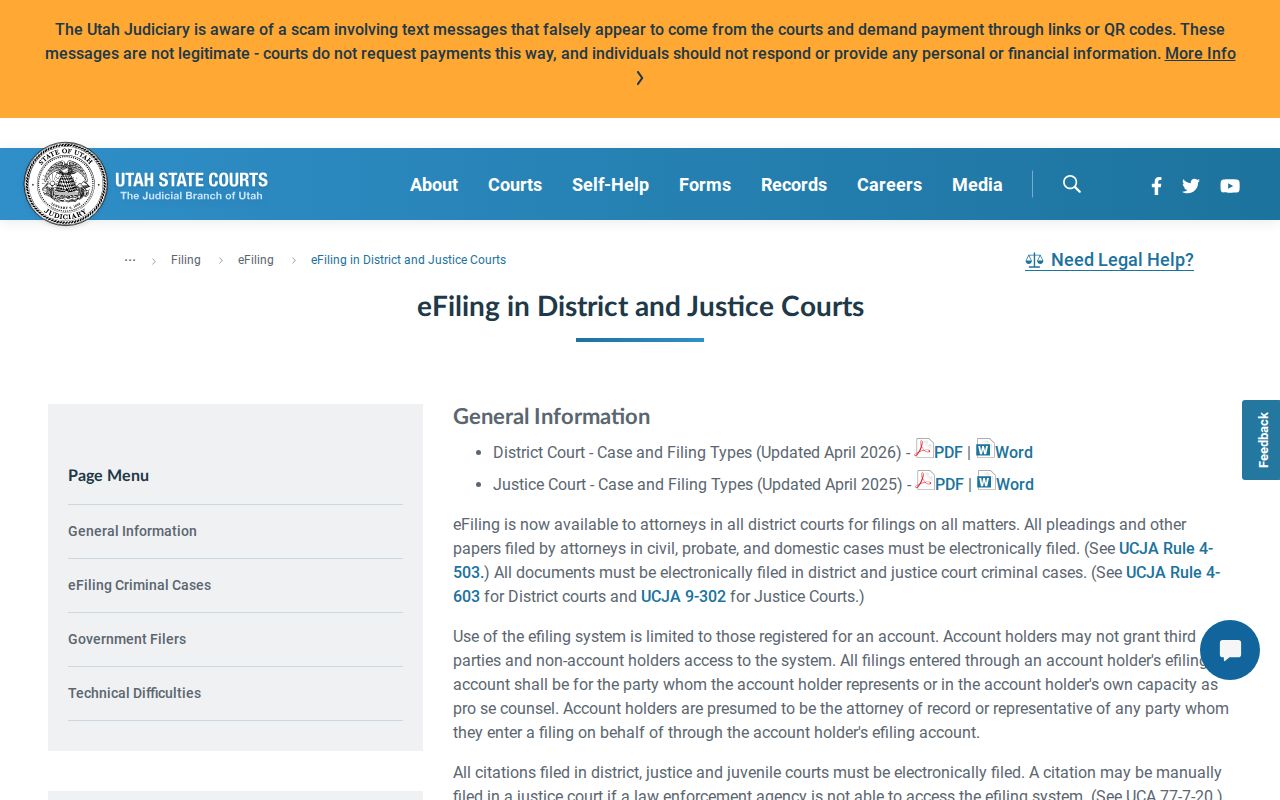
If you are hunting for an existing Wayne County filing, skip the eFiling account. Stick with Xchange, a courthouse terminal, or the clerk for your docket search.
Copy Fees and Certification
A plain copy just reproduces the accessible record. A certified copy adds the clerk's authentication, and an exemplified copy carries a higher formal authentication. Ask the recipient which form is required before paying. Utah rules also split copy charges from staff research, redaction, media, and transcript costs.
| Item | Amount |
|---|---|
| Paper copy | $0.25 per sheet |
| Certified copy | $4 per document plus $0.50 per page |
| Exemplified copy | $6 per document plus $0.50 per page |
| Court audio | $15 per half-day |
| FTR Cloud recording | $10 per recording |
Sixth District Court, Wayne County
18 South Main, PO Box 189
Loa, UT 84747-0189
435-836-1301
District Deputy Clerk Kassidee Brown
Wayne Record Request Timing
Utah court-record rules generally give the clerk ten business days for an ordinary response. Five business days apply for a qualifying expedited request. That window is a response standard. A large, archived, redacted, or technically difficult production will not land at once. Along the way the clerk may ask for clarification, calculate charges, redact protected information, or explain why access is limited. If you disagree with the outcome, an administrative review is available through the rule-based appeal process, generally requested in writing within thirty days. The official Utah court-record request page walks through the public and nonpublic review route and the response standard itself.
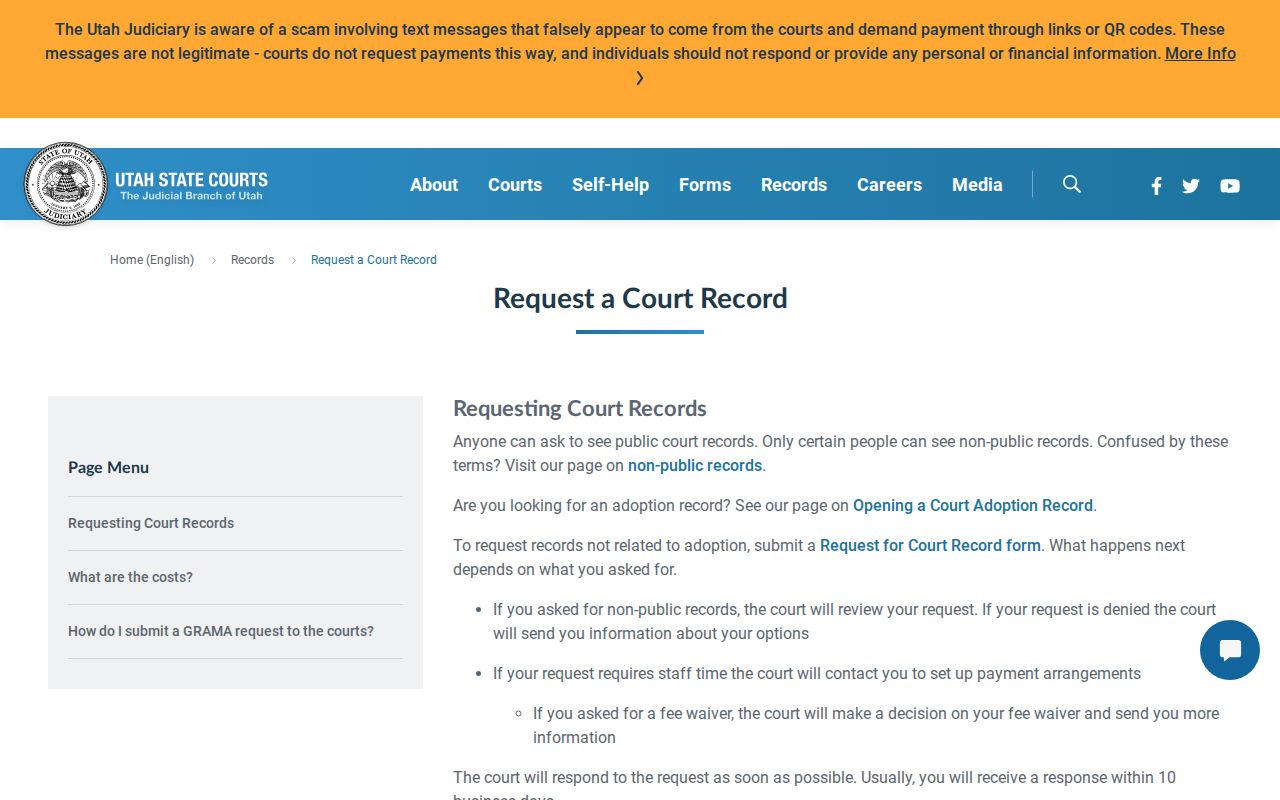
The request page explains why clerks classify material first. A Wayne County copy is released only after that review.
A case number and Wayne court location reduce false matches and help the clerk identify the correct file.
Access Rules for Court Records
Utah's court files are not ordinary agency records. Judicial records follow a different code. Rule 4-202.02 of the Utah Code of Judicial Administration classifies each record as public, private, safeguarded, or sealed, and that label drives what a clerk can release. Juvenile, adoption, expunged, protected, and particular domestic or personal-data materials may be withheld or redacted. Public status attaches to the category. A Wayne County court docket may be open while a single fact or attachment inside it stays sealed.
Key Rules:
Rule 4-202.02 classifies public and nonpublic judicial records.
Rule 4-202.04 sets the content and clerk-review process for a request.
Rule 4-202.08 governs copy, media, staff, audio, and certification charges.
Older Wayne County Court Files
Recent files sit with the court that made them. Anything older than fifty years may have moved to the Utah State Archives. So one old name can take two checks. Ask the Wayne County court first. If staff confirms a transfer, follow the archival reference they give you. Weekly case reports and modern Xchange coverage do not reach that far. They cannot replace the older-file search. When you write, give the court level, an approximate year, the case type, and any case number you know. Genealogy works best narrow. Request just enough to single out the right file. Never treat a same-name hit as proof of identity.
Specific Wayne Requests Move Faster
Vague requests slow everything down. The official Request for Court Record form asks for the court, the case number, the parties, and the documents you want. It also covers your inspection-or-copy choice, delivery details, and any fee waiver or expedited handling you seek. Name the record, not the whole case. A dated order, judgment, pleading, or hearing record is far easier to fill than a request for everything. Ask for the full file only when needed. Precision pays off. A narrow request lets the clerk find the right material, estimate charges, spot redaction work, and say whether the record is public.
Expedited handling is never automatic. Utah's five-business-day standard applies only to a qualifying request that serves the public, not just the requester. Everything else generally follows the ten-business-day standard. If access is denied or limited, read the classification and review instructions in the clerk's response. The administrative appeal is written and must usually start within thirty days.
Wayne Xchange Costs Differ From Copies
Xchange billing stands apart from clerk copying. A non-subscriber pays a $10 one-time initial charge, then $0.35 per search and $1 for each available document. Monthly accounts cost more up front. Setup runs $25, and the $40 monthly price includes five hundred searches, with the per-search rate applying to overage. None of that covers clerk work. Paper, certification, exemplification, audio, transcript, media, fax, email, research, and redaction charges are billed separately by the clerk.
Remember what a search charge buys. It pays for using the public system, not for a guaranteed match. Pick the Wayne County court location first. Use an exact case number when you can. Before buying a document image, compare its docket description and date against the record you need. If no image is offered, note the entry and ask the creating clerk whether a public copy can be produced.
Verify every quoted Wayne County records fee against the current Utah Courts schedule before placing an order, since published charges can change.